How much shrinkage should you expect when felting wool for rug hooking, applique, or other projects? Not surprisingly, it will depend on the tightness of the weave in the wool and other factors in the wool itself. But I decided to do a little experiment with some recently purchased wool fabrics to see if there is a standard rule of thumb.
Watch the Video:
Measuring & Felting the Wool:
I started with 5 different wool fabrics – fresh off the bolts. After tearing off one yard and measuring the width of each different piece, I felted them in my front load washing machine and dried them.
Tearing the wool instead of cutting it ensures you are getting it straight with the grain as it will tear right along the thread where you cut a snip.

Before felting, the pattered wools each measured 62″ wide and the solid, natural wool measured 58″ wide. From this information, I was able to calculate the square inches for each piece by multiplying the width by the length of 36″.
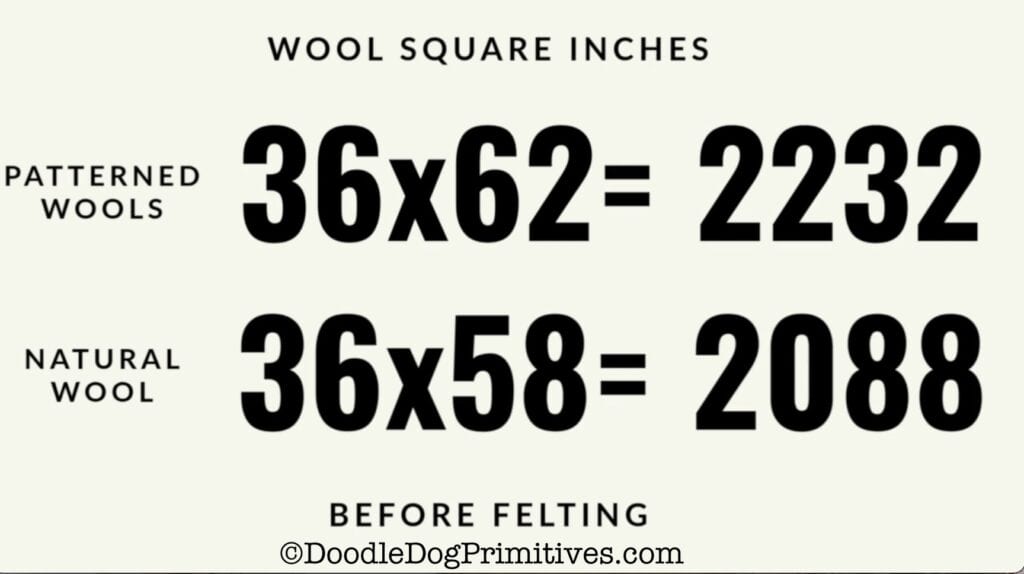
This information will come in helpful when comparing the size after the wool is felted.
Calculating Wool Shrinkage:
After the felting process was complete, I measured each piece of wool fabric a second time. The two tone plaid wool measured 31″ x 57″, or 1767 square inches.
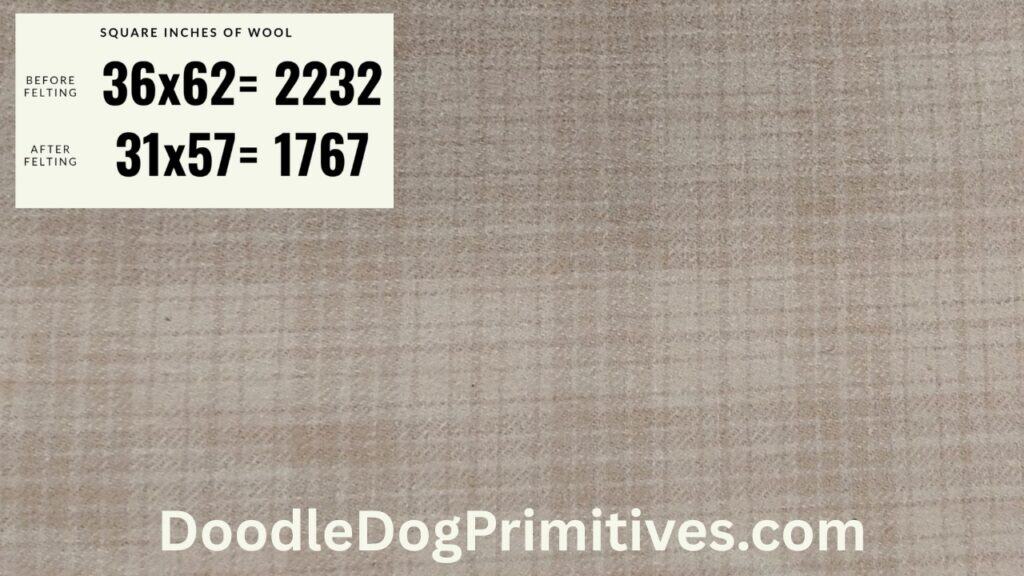
By subtracting the square inches after felting from the square inches before, you can calculate the square inches lost in the felting process. This piece of wool lost 465 square inches. This is a 20% loss in fabric.
Both the dark striped wool and the light striped wool shrunk a little more. They lost 527 square inches, or a 24% loss.

The herringbone wool lost 558 square inches, or a 25% loss.

Finally, the natural colored wool lost 498 square inches, or a 24% loss.
Based on this experiment, you can expect to lose at least 20-25% of the square inches of wool fabric when felting so you need to account for that when purchasing un-felted wool for your projects.
I have felted some wool in the past that I didn’t measure, but I believe they shrunk much more than this 25% guideline. So, if possible, be sure to get plenty of extra wool when planning for a project so you don’t run out. After all, you can never have too much wool!
Pin this Wool Post: