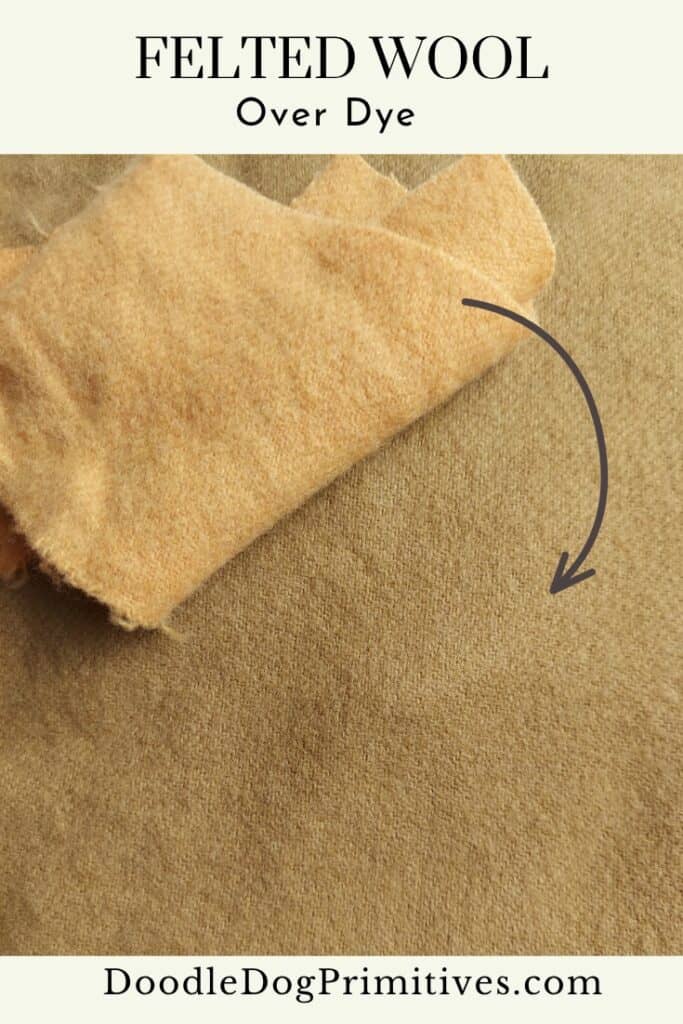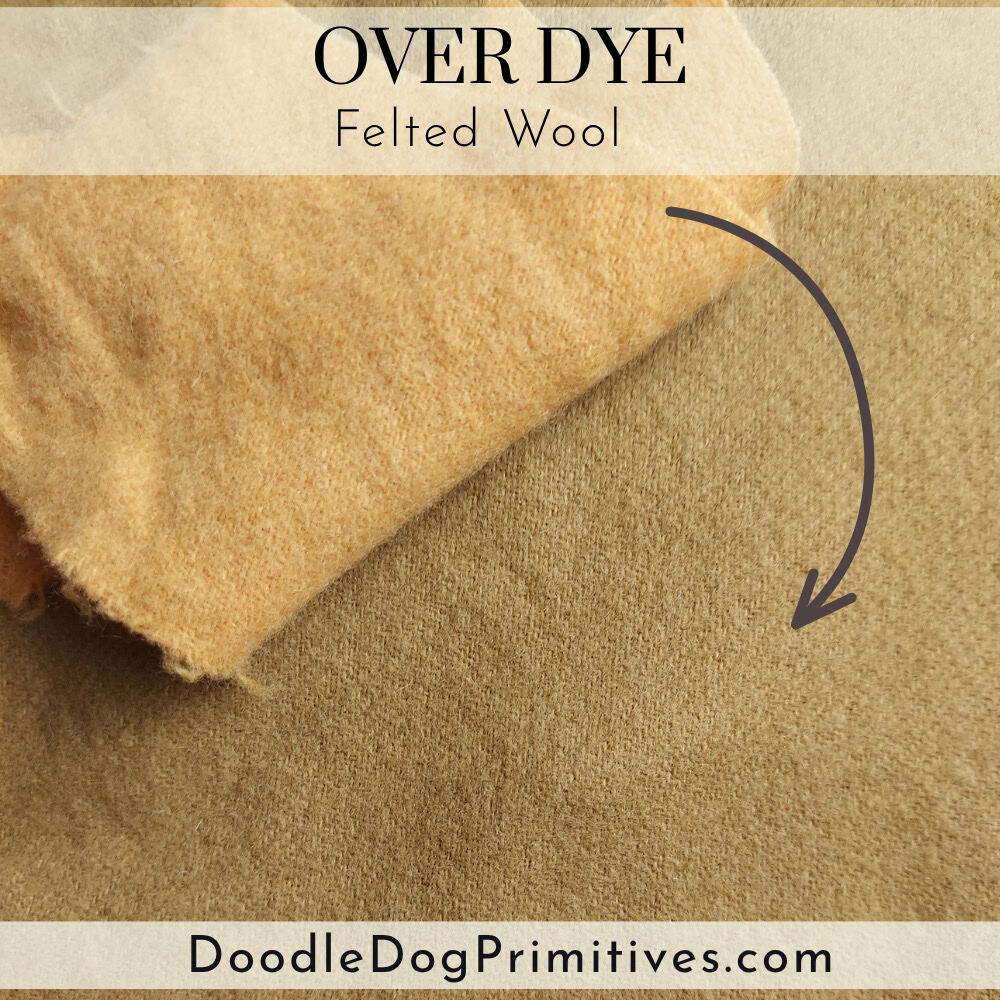
I had a piece of felted wool that wasn’t quite orange and it wasn’t quite gold. I knew I would never use it in any primitive crafting project as it was. So, I decided to over dye it to (hopefully) make it a pretty antique gold shade.
Watch the Tutorial:
This post may contain affiliate links for your convenience, which means if you make a purchase after clicking a link I will earn a small commission but it won’t cost you a penny more. For more information, please visit our Privacy Policy.
Over Dye the Wool:
I never know how things will turn out when I over dye wool. Sometimes, the original color comes out in the dye bath. On a multi color wool, the colors can bleed. So, I only like to try this on a piece of wool that I don’t think I would use as it is. That way, I have nothing to lose!
When I dye wool, I use cooking equipment that I have designated specifically for dyeing purposes. I use stainless steel pots, spoons, etc.
For the dye, I like to use Cushings dyes. They are made to be used on animal fibers and come in a large variety of colors. I chose their black walnut dye for this project. I like it for over dyeing fabrics to get a more primitive shade.
One package of the Cushings dye will dye about one pound of fabric. The piece of wool I dyed was a little under 1/4 of a pound.
My goal was just to tone down the color of this wool, not to completely change the color into a brown so I knew I didn’t need to use a whole package of dye. I started with 1/8 teaspoon of the dye, knowing I could add more if needed.
I followed my regular dye process, by dissolving the dye first, then adding the wet wool, simmering, and adding vinegar. You can read more about how to dye wool here.
I was really pleased with the end result. It is just the perfect color for using in primitive crafts and rug hooking projects. In fact, I used it recently in a no sew wool bowl filler for the star!
Pin this Wool Dyeing Video: