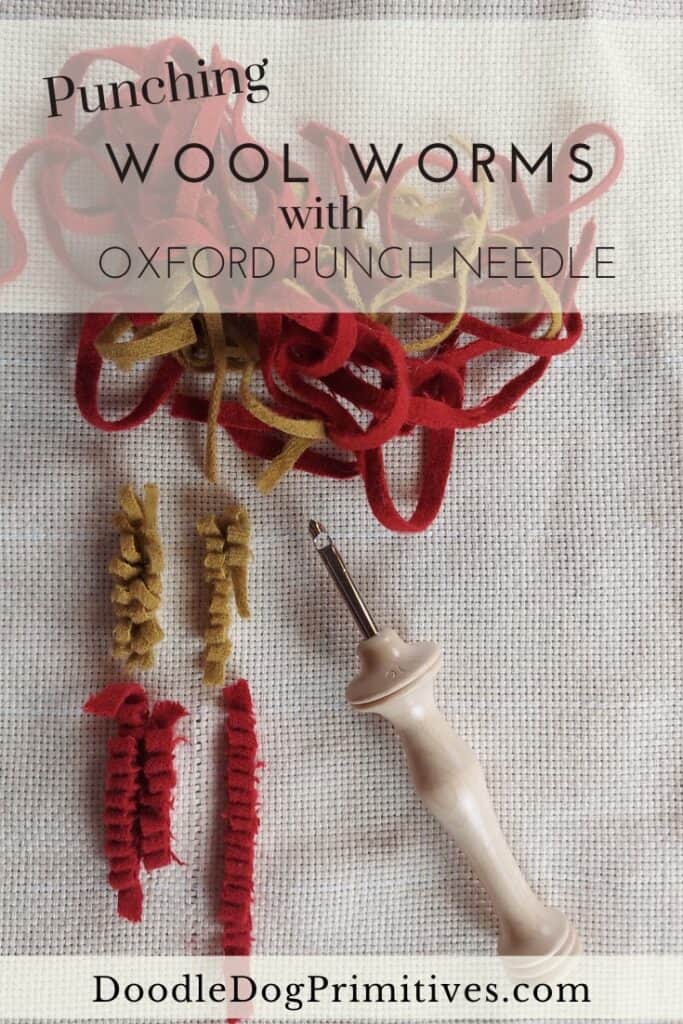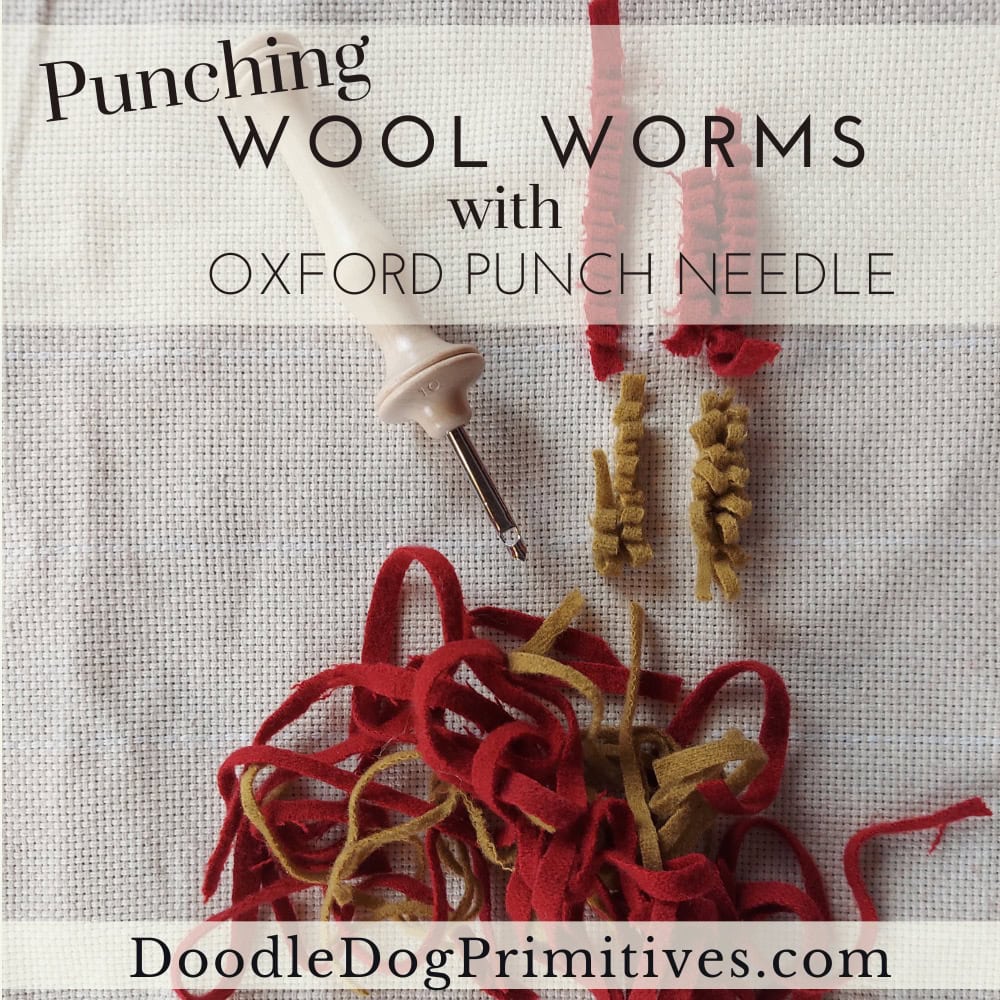
Last year for Christmas, I got an Oxford punch needle and I haven’t tried it yet! So I decided to get it out and see how it works and what the finished result looks like when I punch wool worms. I will be comparing the punched wool to traditional rug hooking loops.
Watch this Video:
This post may contain affiliate links for your convenience, which means if you make a purchase after clicking a link I will earn a small commission but it won’t cost you a penny more. For more information, please visit our Privacy Policy.
Punching the Worms:
The Oxford punch needles come in several different sizes to create different height of loops. You can choose a regular or fine needle, which just indicates the size of the fiber you can punch. I have a regular #10 Oxford punch, which punches 1/4″ loops.
I will be hooking and punching both #8 worms (1/4″ wide wool strips) and #4 worms (1/8″ wide wool strips) that I will be cutting with my vintage Rigby strip cutter.
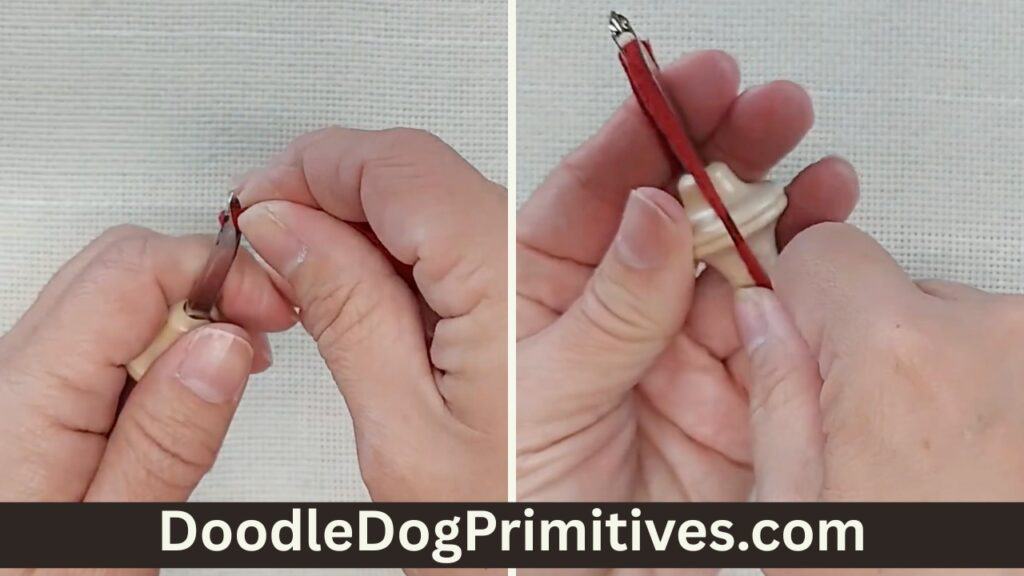
Threading the Oxford punch needle is similar to threading a regular punch needle, but in reverse. First, you thread the eye of the needle and then you place the the fiber into the groove.

I am using monks cloth for the foundation fabric and I punched the loops through every other hole, which was six stitches per inch. I punched 2 rows of the #8 loops and got the rows too close together the first time around.
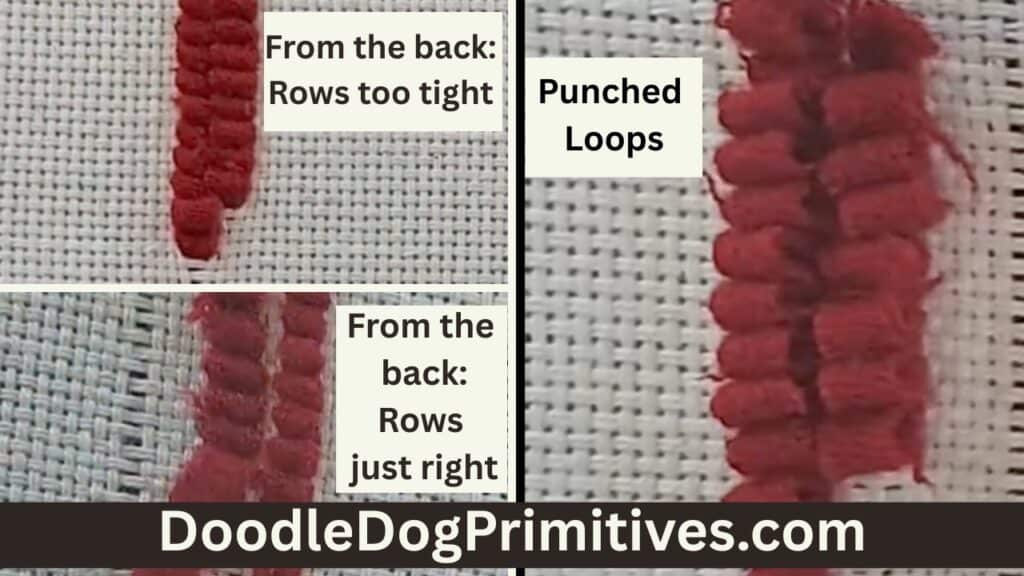
The #4 loops, I also punched in every other hole on the monks cloth. Punching the rows close together seemed to be fine with the narrower strips.
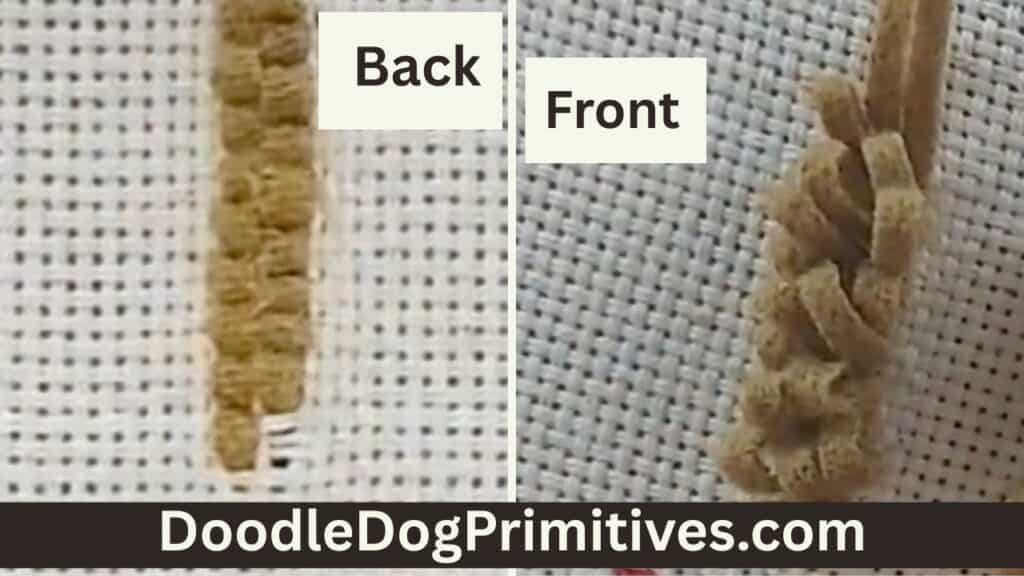
Punching Compared to Hooking:
After punching the worms, I flipped the monks cloth over and started hooking. I don’t normally hook as tall as the punched loops were and I found it difficult to hook my loops that tall! There are probably other hookers out there that hook taller than the 1/4″ punches.
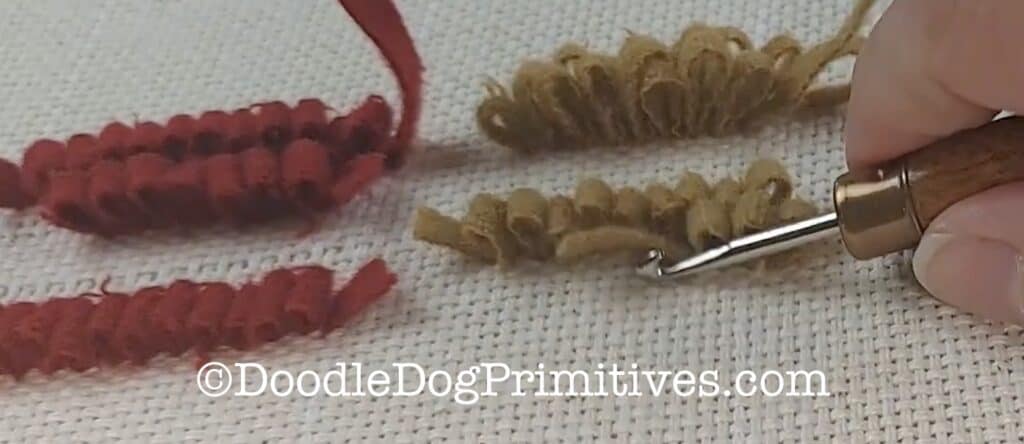
If you are a puncher and interested in getting started in rug hooking, the Oxford punch needle is probably a great gateway for you! For those of you who already hook, it could be a nice alternative for you to do something different without having to get a lot of new supplies. I am thinking the narrow tall loops would make great sheep fleece in an otherwise hooked project! I am probably going to combine hooking and punching in my next project.
Pin this Tutorial: